

By Manju Dawkins, MD — Dermatologist, co-founder of Thimble and mom of 2. Last reviewed June 2026.
Back-to-school season comes with a particular kind of appointment. Depending on your child's grade, they may need several vaccines in a single visit, often at the big entry points like kindergarten, sixth grade, and ninth grade. For a kid who already dreads needles, hearing that it's not one shot but three or four can turn nervousness into full panic.
If that's your child, this is for you. Here's how I'd prepare, both for the appointment itself and for the part that makes it harder: the fact that it's more than one poke.
A quick scheduling note
Summer appointment slots fill up fast, and many schools set firm deadlines for proof of immunization. Booking early does two things: it makes sure you get a spot, and it gives you time to prepare your child rather than rushing in at the last minute. A calm, planned appointment is almost always easier than a scramble.
What the research says
If your child is anxious about this, they're in good company. Research shows that more than half of children aged 6 to 17 report a fear of needles, and for many it traces back to an early experience that hurt more than expected. The encouraging part is that the discomfort is treatable. A 2015 systematic review and meta-analysis found that numbing the skin beforehand significantly reduced distress in children, and that active distraction during the procedure helped too. Addressing both the pain and the fear is what changes the experience.
Tell them what to expect, including the number
Kids handle hard things better when they know what's coming. If your child is getting more than one shot, it's usually better to tell them honestly than to let them discover it in the room. "You're getting three vaccines today. They'll happen quickly, one after another, and then we're done." Predictability lowers fear more than almost anything.
Don't promise it won't hurt. Tell them it's quick, that you'll be right there, and that there's a plan. Honesty keeps their trust intact for the next appointment.
Numb the spots ahead of time
Numbing the skin before the needle goes in takes the sharp sting out of it. For a child facing several pokes, reducing the physical pain does a lot to keep the whole experience from spiraling.
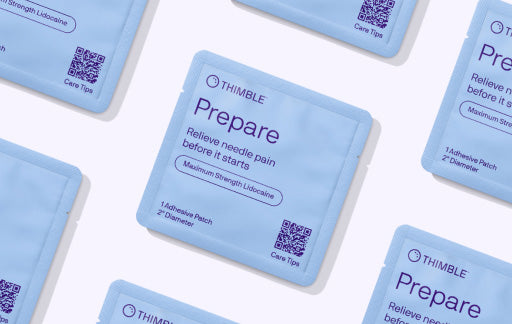
If you know your child will get shots in more than one spot, you can numb each site. For school-age kids, vaccines usually go in the upper arms. Apply numbing about an hour before so it's working by the time you're in the room. The easiest way to do this at home is with a patch. Prepare is an over-the-counter numbing patch with a pre-measured dose of 4% lidocaine, no prescription required. You peel, place, and you're set, with no measuring or mess.
Bring a real distraction
Active distraction, the kind your child has to participate in, works better than a screen playing in the background. For younger kids, bubbles are excellent. For older kids, controlled breathing helps: slow breath in, slower breath out, like blowing out candles. With multiple shots, having something to focus on through the whole sequence keeps them anchored.
Use comfort positioning
Being held down flat increases fear. Holding your child on your lap in a hug, or having them lean against you, helps them feel safe and in control while still letting the nurse reach each spot. Ask your provider about comfort positioning. Most are glad to work with you.
Stay steady yourself
Your child reads your body before they hear your words. Several shots can make a parent tense too, which the child picks up on. You don't have to feel perfectly calm. Just hold onto the facts: it's quick, you've prepared, and you're right there the whole time.
Plan the reward, no conditions
A small treat waiting on the other side gives your child something to move toward, which is especially helpful when there's more to get through. Make it unconditional. Tears are allowed. They showed up and got through something hard, and that's the whole deal.
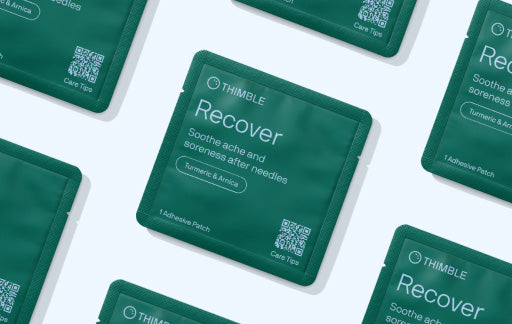
Several shots at once can leave arms achy enough that they sit out basketball or skip the trampoline the next day, and that becomes one more reason to dread the next appointment. A Recover patch uses turmeric and arnica to soothe that ache, so the shots don't follow them into the rest of their week. The less the whole experience costs them, the less they'll fear going back.
The short version
Book early, tell them honestly how many shots to expect, numb the spots about an hour ahead, bring an active distraction, hold them close, and have a reward ready. Back-to-school appointments can be a lot, especially when it's more than one poke. A little preparation turns a dreaded visit into something your child can get through.
Dr. Manju Dawkins is a board-certified dermatologist, mom of two, and the founder of Thimble. She created the Thimble Needle Care System after experiencing her daughter's first shots.
FAQ:
How do I prepare my child for back-to-school shots?
Book the appointment early, tell your child honestly how many shots to expect, numb the injection sites about an hour ahead, bring an active distraction like bubbles or breathing exercises, use comfort positioning, and have a small reward ready afterward.
How do I help my child get through multiple shots at once?
Be honest about the number ahead of time so it's not a surprise, numb each injection site beforehand to reduce the pain, and keep an active distraction going through the whole sequence. A reward waiting afterward gives them something to move toward.
Can you numb the skin before school vaccines?
Yes. Topical numbing can be applied to each injection site, usually the upper arms for school-age kids, about an hour ahead so it's working by the time of the appointment. It reduces the sharp sting, though some pressure may still be felt.
When should I schedule back-to-school shots?
Earlier is better. Summer appointment slots fill quickly and many schools have firm immunization deadlines. Booking early secures a spot and gives you time to prepare your child for the visit.