

By Manju Dawkins, MD — Dermatologist, co-founder of Thimble and mom of 2. Last reviewed June 2026.
A common challenge with numbing is timing. Applied too late, it doesn’t always have enough time to fully work and people walk away thinking it failed.
Here's how to get it right.
The short answer
Most topical numbing products need to be applied about an hour before the procedure to reach full effect. Some take longer. Plan to apply it before you leave home, not in the waiting room.
If your appointment is at 10:00, the numbing goes on around 9:00.
What the research says
The reason timing matters comes down to how these products work. Topical anesthetics have to absorb into the skin before they take effect, which is why pediatric pain-management guidance from children's hospitals consistently recommends applying them ahead of the procedure rather than in the moment. The studies showing numbing reduces needle pain all relied on applying it in advance and giving it time to work. Applied too late, it simply hasn't had the chance to do its job.
Why timing matters so much
Topical numbing works by slowly absorbing into the top layers of skin and blocking the nerve signals there. That absorption takes time. There's no version of this that works in five minutes. The numbing isn't instant the way a switch is. It builds.
This is why applying at home is usually the move. You control the clock, your child is in a comfortable environment, and the numbing is fully working by the time you arrive.
Where to apply it
Put it on the exact spot where the needle will go in. That varies by procedure:
-
Vaccines in older kids and adults: usually the upper arm
-
Vaccines in babies and toddlers: usually the thigh
-
Blood draws: usually the inner crook of the elbow
-
IVs: often the back of the hand, wrist, or forearm
If you're not certain where the needle will go, call ahead and ask. For procedures where the site isn't predictable, your health care team can guide you.
Cream vs. patch and how it changes the steps
With cream, you measure out an amount, apply it to the spot, usually cover it to keep it in place, and wipe it off before the procedure. More steps, more room for error.
With a patch, you peel and place. The dose is pre-measured and the placement is fixed. There's nothing to wipe off the wrong area and no guessing at the amount. For most parents, that's the simpler path.
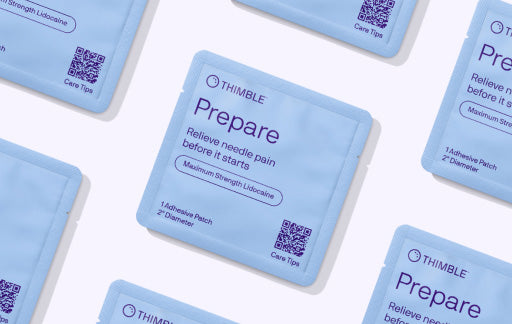
Prepare, the numbing patch I created, uses a pre-measured dose of 4% lidocaine and is designed exactly for this: apply at home, head to the appointment, done.
What if you forgot or ran out of time?
Something is better than nothing. That’s worth repeating - something is better than nothing. If you only have twenty minutes, still apply it. You won't get the full effect, but partial numbing plus the reassurance of having a plan still helps. Pain is partly physical and partly emotional, and addressing either one matters.
Just don't skip it entirely because the timing wasn't perfect.
One honest caveat
Numbing reduces pain. It doesn't promise zero pain. Everyone's experience is a little different, and some pressure may still be felt. The goal isn't a painless poke. It's a poke that hurts less so that fear has less to feed on next time.
Manju Dawkins, MD is a board-certified dermatologist, mom of two, and the co-founder of Thimble. She created the Thimble Needle Care System after experiencing her daughter's first shots.
FAQ:
How long before a shot should you apply numbing cream or a patch?
Most topical numbing products need about an hour to reach full effect. Apply before you leave home so it's working by the time you arrive.
Can you apply numbing right before the shot?
Applied right before, numbing won't have had time to absorb and work. It needs roughly an hour of lead time. Some numbing is better than none, but earlier is far better.
Where do you apply numbing for a blood draw?
Usually the inner crook of the elbow, where blood is typically drawn. If you're unsure, confirm the site with your health care team ahead of time.
Does numbing wear off?
Yes, it can. Follow the product's specific guidance on how long it lasts. The Prepare patch can be worn for up to 8 hours (with the center in tact) prior to a procedure.