

By Manju Dawkins, MD — Dermatologist, co-founder of Thimble and mom of 2. Last reviewed June 2026.
If you're doing self-injections at home, whether for IVF, fertility treatment, hormone therapy, GLP-1’s or another medication, the hardest part often isn't any single shot. It's doing it again tomorrow. And the day after. The needle becomes a daily source of dread, and that can wear on you.
I want you to know two things. First, dreading it doesn't mean you're weak. Needle fear is one of the most common fears there is, and giving yourself the shot is harder than receiving one. Second, you don’t just have to “suck it up”. There's a lot you can do to make it hurt less.
What the research says
If you dread the needle, you're far from alone. A large 2022 study found that 63% of adults report some fear of needles, and giving yourself an injection is often harder than receiving one. It's also a problem with real solutions. A 2015 systematic review found that numbing the skin with a topical anesthetic reduced self-reported pain in adults, not just children. Reducing the physical sting is one of the most concrete things you can do to make a daily injection routine more bearable.
Numb the spot before you inject
This is the step that can make the biggest difference. Numbing the skin before the needle goes in takes the sharp sting out of it. When you're facing this every day, that matters enormously. A shot that hurts less is a shot you dread less, and that compounds over weeks of treatment.
Apply it ahead of your injection, not in the moment. If your injection is at 8pm, about an hour before is when you want to prep the skin with a numbing patch or cream.
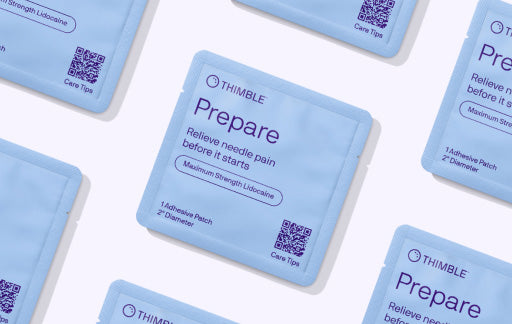
Prepare is an over-the-counter numbing patch with a pre-measured dose of 4% lidocaine, no prescription required. For daily injectors especially, numbing patches remove the mess and the measuring that comes with cream. You peel, place, and go about your evening until it's time.
Let cold medication warm up first
Cold medication stings more going in. If your medication is stored in the refrigerator, take it out ahead of time and let it come to room temperature, or warm the syringe gently in your hand for a minute or two. Never use a microwave or any direct heat. This one small step removes a surprising amount of the discomfort. Of course, always use as directed or consult your physician if this is possible with your medication.
Rotate your injection sites
Injecting the same spot over and over leaves the tissue sore and more sensitive, which makes each shot hurt more than the last. Rotating between sites, the abdomen and upper thigh are common, gives each spot time to recover and keeps any single area from becoming a problem.
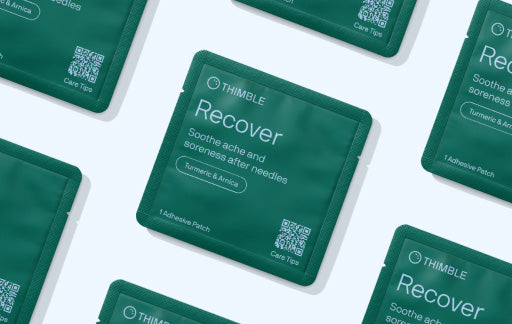
The Recover patch has turmeric and arnica to alleviate soreness and bruising associated with repeated injections. It helps keep the skin happy and healthy.
Set up a calm, consistent space
Designate one spot in your home as your injection area. Keep your supplies organized there. If you inject somewhere you need to see, like the back of the hip, set up a mirror. A familiar, predictable routine lowers the anxiety that builds when everything feels improvised. If music or a few slow breaths help you settle, make them part of the ritual every time.
Breathe through it, don't hold your breath
Holding your breath tenses everything. Slow, controlled breathing does the opposite. A long exhale as the needle goes in activates the body's calm-down response and genuinely reduces how much you feel. Practice it once or twice before you start.
Be honest with yourself about the fear
If self-injection brings real panic, not just nerves, you're not alone and it's worth naming. Many people doing fertility treatment describe the injections as the hardest part of the whole process.
Acknowledging that, rather than pushing through and pretending it's fine, is often what makes it manageable. Ask for help. Sometimes a partner injecting can help.
The bottom line
You can't always make the needle disappear, but you can take the edge off it. Numb the skin ahead of time, warm the medication, rotate your sites, build a calm routine, and breathe through each one. When the daily shot hurts less, the whole stretch of treatment gets a little more bearable. It’s worth being gentle with yourself along the way.
Manju Dawkins, MD is a board-certified dermatologist, mom of two, and the co-founder of Thimble. She created the Thimble Needle Care System after experiencing her daughter's first shots.
FAQ:
Does numbing cream work for IVF and fertility injections?
Yes. Numbing the skin before a self-injection reduces the pain of the needle. It needs to be applied ahead of time so it can absorb and take effect. It reduces the sharp sting, though some pressure may still be felt. If you're doing PIO specifically, here are a few more tips: tips to make PIO hurt less
How long before a self-injection should I apply numbing?
Topical numbing needs time to absorb. Applying it ahead of your scheduled injection, rather than right before, gives it time to reach full effect. Follow the specific product's guidance on timing. We recommend about an hour for Prepare.
Why do my fertility injections hurt more some days than others?
Injecting the same site repeatedly leaves tissue sore and more sensitive. Rotating injection sites, and letting cold medication warm to room temperature first, can reduce day-to-day pain.
Is a numbing patch better than cream for daily injections?
For daily injectors, a patch removes the measuring and mess of cream and delivers a pre-measured dose in a fixed spot. Both reduce pain when applied early enough.