

By Manju Dawkins, MD — Dermatologist, co-founder of Thimble and mom of 2. Last reviewed June 2026.
Blood draws can be harder on kids than vaccines. They take longer, the room feels more clinical, and the waiting is its own kind of stress. If your child is anxious about an upcoming blood draw, here's how to prepare so the day goes as smoothly as it can.
What the research says
If your child is scared, they're in the majority. Research shows more than half of children aged 6 to 17 report a fear of needles, and for many it traces back to one early experience that hurt more than expected. The good news is that the discomfort is treatable. Meta-analyses of childhood needle procedures have found that numbing the skin beforehand significantly reduces pain, and that active distraction during the procedure reduces distress. Addressing both the pain and the fear, rather than just one, gives your child the best experience.
Tell them what's going to happen, simply and honestly
Kids fear the unknown more than the poke itself. Walk them through it in plain language ahead of time. "They'll clean a little spot on your arm, you'll feel a quick pinch, and then we just wait a minute while they collect what they need."
Don't promise it won't hurt. Tell them it's quick and that you'll be right there. Honesty keeps their trust intact for next time.
Numb the spot ahead of time
This is the step that gets skipped most, and for blood draws it matters even more than for a quick vaccine, because the needle stays in longer.
Numbing the skin before you go takes the sharp sting out of the initial poke. For a blood draw, apply it to the inner crook of the elbow, which is where blood is usually drawn. If your child has had draws from a different spot before, or you're not sure, call ahead and ask.
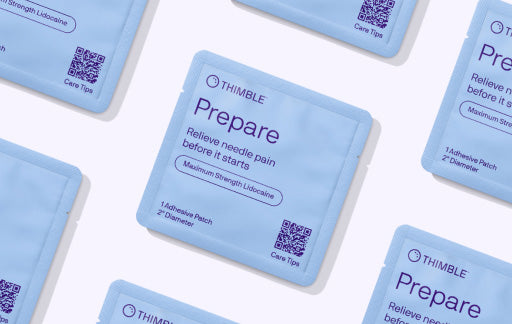
Apply it about an hour before so it's fully working by the time you're called back. A patch makes this simple. Prepare, the numbing patch I created for kids and adults, is over-the-counter with a pre-measured dose of 4% lidocaine, no prescription and nothing to wipe off.
Hydrate beforehand
This one is specific to blood draws. A well-hydrated child has veins that are easier to find, which means fewer attempts and a faster draw. Encourage water in the hours before the appointment unless they've been told specifically not to.
Plan your distraction
The draw takes longer than a shot, so you need a distraction that lasts. A video, a game they're engaged in, a story you tell together, or having them look away and focus on slow breathing. For older kids, breath work genuinely helps. Slow breath in, slower breath out, like blowing out candles.
Use comfort positioning
Let your child sit upright, ideally on your lap or leaned against you, rather than lying down or being held flat. Feeling supported and in control lowers fear. Ask the phlebotomist about the best position. Most are glad to work with you.
Watch for lightheadedness
Some kids feel faint during blood draws. If yours has before, mention it to the staff and keep them supported. There's a simple technique called applied muscle tension (repeated and brief tensing of the arms and legs) — that can help reduce that faint feeling. Ask your health care team if it's appropriate.
Reward the effort afterward, no conditions
A treat on the other side gives them something to aim for. Make it unconditional. They sat through something hard, and that's worth celebrating whether or not there were tears.
The short version
Explain it honestly, numb the inner elbow about an hour ahead, hydrate, plan a distraction that lasts, keep them comfortable and supported, watch for faintness, and reward the effort. Blood draws are harder sometimes than shots, but preparation makes a real difference.
Manju Dawkins, MD is a board-certified dermatologist, mom of two, and the co-founder of Thimble. She created the Thimble Needle Care System after experiencing her daughter's first shots.
FAQ:
How do I prepare my child for a blood draw?
Explain the process honestly ahead of time, numb the draw site about an hour before, keep your child hydrated, plan a lasting distraction, use comfort positioning, and reward the effort afterward.
Can you numb the skin before a blood draw?
Yes. Apply topical numbing to the usual draw site, typically the inner crook of the elbow, about an hour ahead so it's working by the time of the draw. Confirm the location with your health care team if unsure.
Why are blood draws harder than shots for kids?
Blood draws take longer than a quick vaccine, the needle stays in longer, and the clinical setting and waiting can add to the anxiety. Preparation and numbing help with both the pain and the fear.
Should my child drink water before a blood draw?
Unless they've been told not to for the test, staying hydrated helps make veins easier to find, which can mean fewer attempts and a quicker draw.