

By Manju Dawkins, MD — Dermatologist, co-founder of Thimble and mom of 2. Last reviewed July 2026.
You had blood drawn, and now there's a bruise blooming on the inside of your arm, maybe larger or darker than you expected. If you're wondering whether something went wrong, the reassuring news is that bruising after a blood draw is very common. In most cases, it's simply part of the normal healing process and fades on its own within a week or two.
Here's why bruising happens, what you can expect, what helps, and the few signs that warrant a call to your healthcare team.
Why do you bruise after a blood draw?
A bruise forms when a small amount of blood leaks from a blood vessel into the surrounding tissue. During a blood draw, this most commonly happens when a small amount of blood escapes from the vein after it has been punctured. As that blood becomes trapped beneath the skin, it creates the familiar purple, blue, green, and eventually yellow discoloration we recognize as a bruise.
Bruising is influenced by both the procedure and the person. Even an expertly performed blood draw can leave a surprisingly dramatic bruise, while a difficult blood draw may leave almost none.
Several factors can increase the likelihood of bruising, including:
-
Veins that are small, deep, or more difficult to access
-
The needle passing through part of the vein wall
-
Not holding firm pressure after the needle is removed
-
Older age or thinner skin
-
Medications such as blood thinners or aspirin
Most of the time, bruising does not mean that anything was done incorrectly.
How long does a bruise after a blood draw last?
Most bruises follow the same healing process. They are often darkest during the first day or two, then gradually fade through the familiar color changes from purple to green to yellow as your body reabsorbs the trapped blood.
Most blood draw bruises resolve within one to two weeks.
Bruises often look worse before they look better. As long as the bruise is gradually fading and changing color over time, it is healing normally.
The best way to prevent bruising
The most important step happens immediately after the needle comes out. Firm, direct pressure over the puncture site helps seal the tiny opening in the vein before more blood can escape into the surrounding tissue. In many cases, that simple step determines how much bruising develops over the next day or two.
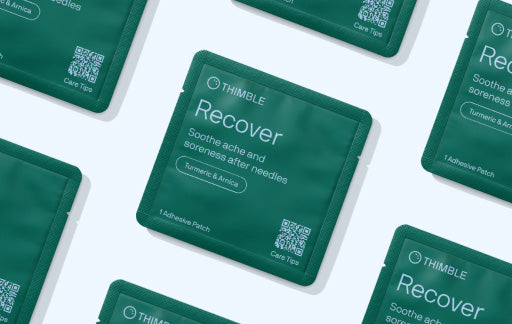
After the blood draw, Recover can be applied while maintaining firm pressure over the puncture site, serving the same practical role as a standard adhesive bandage while also supporting comfort afterward. Recover contains arnica and turmeric, ingredients traditionally used to support comfort after minor soft tissue injury.


What helps a bruise heal?
If a bruise develops, there are several simple ways to support the normal healing process.
During the first several hours: Apply a cool compress to help limit bleeding into the surrounding tissue and reduce soreness.
After the first 24 hours: Gentle warmth may help improve circulation and support your body's natural process of clearing the trapped blood.
If the area is tender: Continue using the arm normally, but avoid strenuous activity until it's more comfortable.
A note if it was your child
Children bruise too, and a bruise after a blood draw can be upsetting for a child who was already nervous about needles. The bruise can become one more reason they fear the next blood draw.
A simple, matter-of-fact explanation can help. Let them know that the bruise is a normal part of healing and that it will gradually fade. Looking after the area afterward and making future blood draws more comfortable, including numbing the skin beforehand, can help build more positive healthcare experiences over time.
When should you call your doctor?
The vast majority of blood draw bruises heal without any treatment. However, you should contact your healthcare team if you notice:
-
A bruise that continues to grow significantly after the first day
-
A firm, painful swelling that may represent a hematoma (a larger collection of blood beneath the skin)
-
Increasing pain, warmth, or spreading redness after a day or two
-
A bruise that is not improving after two weeks
-
Frequent unexplained bruising or bruising accompanied by unusual bleeding elsewhere
-
Numbness, tingling, weakness, or difficulty moving the hand or arm
Recover is designed to support comfort after routine needle procedures. It is not a treatment for a hematoma or an infection, so if any of the symptoms above are present, it's important to contact your healthcare professional.
The short version
Bruising after a blood draw is common and usually nothing to worry about. It's simply a small amount of blood that has collected beneath the skin while the vein heals. Applying firm pressure immediately after the blood draw is the best way to reduce bruising. If a bruise develops, give it time to heal, use simple comfort measures as needed, and watch for the normal progression of color changes. If the bruise continues to enlarge, becomes increasingly painful, or is associated with significant swelling, numbness, or redness, contact your healthcare team.
FAQ
Is it normal to bruise after a blood draw?
Yes. Bruising occurs when a small amount of blood leaks beneath the skin after the vein is punctured. It is one of the most common minor side effects of a blood draw and usually resolves on its own within one to two weeks.
How long does a bruise from a blood draw last?
Most bruises fade within one to two weeks, gradually changing from purple or blue to green and yellow as your body reabsorbs the trapped blood. A bruise that is steadily fading is healing normally.
Why did I bruise so badly after a blood draw?
Some people bruise more easily than others because of factors such as vein anatomy, thinner skin, age, or medications like blood thinners or aspirin. Holding insufficient pressure after the needle is removed can also allow more blood to collect beneath the skin. Even a large bruise does not necessarily mean anything went wrong during the blood draw.
How can I prevent a bruise after a blood draw?
Applying firm pressure immediately after the needle is removed is the most effective way to reduce bruising. Recover can be applied while maintaining that pressure, serving the same practical role as a standard adhesive bandage while also supporting comfort after the procedure.
When should I worry about a bruise after a blood draw?
Most bruises heal on their own. Contact your healthcare professional if the bruise continues to enlarge after the first day, forms a firm, painful swelling, becomes increasingly warm or red, does not improve after two weeks, or is associated with numbness, tingling, weakness, or significant swelling.
What should I do if blood draws and bruising make me feel faint?
Bruising isn't the only thing that catches people off guard at a blood draw. If you tend to get lightheaded or clammy, that's a separate and very common reaction, and there's a technique that helps. We covered fainting during blood draws here.