


By Manju Dawkins, MD — Board-certified dermatologist, co-founder of Thimble, and mom of two. Last reviewed July 2026.
If you've ever felt dizzy, sweaty, nauseated, or even passed out during a blood draw or shot, you're not alone. Millions of people experience this every year.
The reassuring news is that this is usually caused by a normal reflex called vasovagal syncope, and there are simple, evidence-based techniques that can dramatically reduce the chances of it happening again.
Whether you're five or seventy-five, understanding what's happening in your body is the first step toward feeling more confident during needle procedures.
What Is Vasovagal Syncope?
Fainting around needles is not a sign of weakness, an anxiety disorder, or something being "wrong" with you. It's a normal physiological reflex.
Your nervous system is responding with a reflex that, while unhelpful during a blood draw or injection, is a normal part of human physiology. It is also remarkably common.
Research has found:
-
Approximately 63% of adults report some degree of needle fear, and about one-third have avoided vaccinations because of it.
-
Between 20% and 50% of adolescents experience significant needle fear.
-
By age 60, more than 40% of women and 30% of men will have experienced at least one vasovagal fainting episode.
-
The most common ages for a first episode are during adolescence and later adulthood, meaning this can begin, or return, at almost any stage of life.
Whether it's a toddler screaming through vaccines, a teenager struggling through blood work, or an adult who has quietly avoided healthcare for years, this is a shared human experience. Most importantly, it's very treatable.
What's Actually Happening?
When we anticipate a needle, our bodies naturally activate a stress response. Heart rate increases. Blood pressure rises. Muscles tense.
For people who are prone to vasovagal syncope, that response is suddenly followed by the opposite reaction.
The heart rate slows.
Blood vessels relax.
Blood pressure drops.
For a brief moment, less blood reaches the brain, leading to symptoms such as:
-
Lightheadedness
-
Sweating
-
Nausea
-
Tunnel vision
-
Ringing in the ears
-
Fainting
Doctors call this a vasovagal response.
The episode is usually brief and, by itself, is not dangerous. The greatest risk comes from falling during the faint, which is why prevention is so important.
One of the hardest parts of vasovagal syncope isn't the faint itself. It's what often happens afterward.
People begin anticipating another episode and that anticipation becomes anxiety.
The anxiety increases the body's stress response, making another episode more likely.
Breaking that cycle, even once, can begin rebuilding confidence around future healthcare experiences.
The Game Changer: Applied Muscle Tension
For older children, teenagers, and adults, one technique stands above the rest. It's called applied muscle tension.
Clinical trials, systematic reviews, and professional society guidelines consistently recommend this technique for people who experience vasovagal fainting.
A landmark randomized clinical trial published in the Journal of the American College of Cardiology found that physical counter-pressure maneuvers reduced recurrent fainting episodes by nearly 40%. A 2024 meta-analysis confirmed these findings, and studies in blood donors found that applied muscle tension nearly cut vasovagal reactions in half.
Today, physical counter-pressure maneuvers are recommended by both the American College of Cardiology and the European Society of Cardiology for people with vasovagal syncope.
Why does it work?
When you tense the large muscles in your legs, abdomen, or arms, those muscles squeeze nearby blood vessels.
This helps push blood back toward the heart and brain, counteracting the sudden drop in blood pressure that causes fainting.
Think of it as helping your body overcome the reflex.
The most important point is timing.
Start before you begin feeling dizzy, not afterward.
How to Do It
The technique is simple and takes only a few minutes to learn.
-
Tighten the muscles in your legs, buttocks, abdomen, or arms.
-
Hold the tension for about 10 to 15 seconds.
-
Relax for about 10 seconds.
-
Repeat this cycle before and throughout the needle procedure.
Many people find it helpful to practice at home before their appointment. Like any skill, it becomes easier the more familiar it feels.
Helping Younger Children
Children younger than about seven years old are generally too young to use applied muscle tension effectively.
Fortunately, there are many other evidence-based ways to reduce pain and distress.
A Cochrane review including more than 5,500 children found strong evidence supporting several simple interventions.
1. Topical numbing
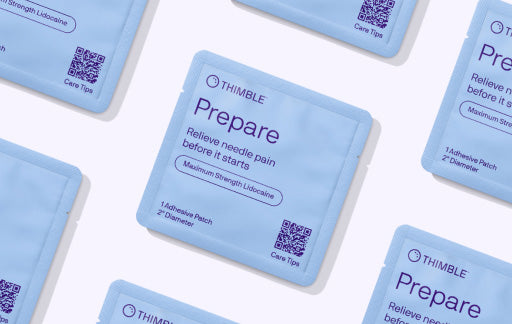
One of the most effective ways to reduce the pain of needle procedures is applying topical numbing before the appointment with a product like Prepare.
Clinical practice guidelines consistently recommend topical anesthetics because they significantly reduce pain without affecting vaccine effectiveness.
When combined with distraction, topical numbing can make vaccinations substantially more comfortable.
2. Active distraction
For younger children, distraction works remarkably well.
Options include:
-
Blowing bubbles
-
Watching a favorite show
-
Reading books
-
Playing with toys
-
Interactive games
-
Virtual reality (when available)
-
Singing songs or telling stories
The specific activity matters less than whether it genuinely captures the child's attention.
Whenever possible, children should be held upright by a parent or caregiver rather than being restrained on an exam table.
The American Academy of Pediatrics recommends comfort positioning because it reduces distress while allowing vaccines to be given safely.
4. Sweet solutions
For young infants, small amounts of sucrose solution before vaccination have consistently been shown to reduce procedural pain.
Follow your healthcare team's recommendations regarding when and how to use this approach.
5. Stay calm and honest
Children look to the adults around them to understand whether a situation is threatening.
Research has shown that excessive reassurance, such as repeatedly saying "Don't worry" or "It won't hurt," can actually increase distress.
Instead, try:
"You'll probably feel a quick pinch, and then it will be over. We'll get through it together."
That simple shift helps preserve trust.
Teenagers: The Peak Age for Needle Fainting
Teenagers are in a unique position. They're old enough to benefit from applied muscle tension, yet adolescence is also the most common time for a first vasovagal fainting episode.
For teens, the best approach combines:
-
Applied muscle tension
-
Lying down during the procedure
-
Staying well hydrated
-
Active distraction, such as music or conversation
-
Understanding that this is incredibly common
Normalization matters.
Many teenagers feel embarrassed when they faint. Knowing they're far from alone often reduces the anxiety that makes future episodes more likely.
Needle experiences during adolescence can also shape how someone feels about healthcare for years to come. Helping teenagers feel prepared and successful today can influence whether they seek preventive healthcare as adults.
Adults: It's Never Too Late to Change the Experience
Many adults assume that if they've always fainted during blood draws or injections, they'll simply have to live with it.
That's not true.
Needle fear and vasovagal fainting are highly treatable, and many adults find that learning a few simple strategies completely changes the experience.
One of the most important things you can do is tell your nurse or doctor before the procedure begins. Healthcare professionals perform blood draws and injections every day. Knowing that you're prone to fainting allows them to make small adjustments that can make a big difference.
Five Ways to Reduce Your Chances of Fainting
1. Tell your nurse or doctor ahead of time
This is the single most important step.
Your healthcare team may choose to perform the procedure while you're lying down, allow extra time, or coach you through applied muscle tension.
There's no reason to feel embarrassed. Vasovagal reactions are common, and your healthcare team has almost certainly cared for many people with the same concern.
2. Consider lying down
If you've fainted before, lying down during the procedure is often the safest option.
It reduces the risk of injury from falling and makes it easier for blood to continue reaching the brain if your blood pressure drops.
3. Use applied muscle tension
Begin tensing your leg, abdominal, or arm muscles before the procedure starts, and continue cycling between tension and relaxation throughout the blood draw or injection.
Remember, the technique works best when started before symptoms develop.
4. Stay hydrated
Being dehydrated can make fainting more likely.
Unless you've been instructed to fast or limit fluids for a medical reason, drinking water before your appointment may help support normal blood pressure.
Some studies have also found that drinking water immediately before procedures can reduce vasovagal reactions in people who are prone to fainting.
5. Eat if you're allowed
Low blood sugar doesn't directly cause vasovagal syncope, but feeling hungry can make many people feel less well during medical procedures.
If fasting isn't required for your appointment, having a light meal or snack beforehand may help you feel more comfortable.
Don't Let One Experience Become the Next
One difficult experience can create a cycle. Each successful blood draw, vaccine, or IV helps build confidence for the next one.
One of the most powerful ways to reduce needle fear is simply having repeated experiences that go better than expected.
Celebrate those wins.
They matter more than you might realize.
What If These Strategies Aren't Enough?
For some people, needle fear becomes so intense that it leads them to avoid important healthcare altogether.
If you're delaying blood tests, avoiding vaccines, postponing medical treatments, or struggling to receive medications because of needle fear or fainting, talk with your doctor.
Several effective treatments are available.
These include:
-
Cognitive behavioral therapy (CBT) - we love Therapy Lab's needle phobia program
-
Exposure therapy
-
Applied muscle tension training
-
Pain management strategies, including topical numbing
-
Anxiety management techniques
The goal isn't simply getting through today's appointment.
It's helping you receive the healthcare you need throughout your life.
When Should You See a Doctor About Fainting?
Most episodes of vasovagal syncope are harmless.
However, you should speak with your doctor if:
-
Fainting happens without a clear trigger.
-
It occurs during exercise.
-
It is associated with chest pain, palpitations, or shortness of breath.
-
Recovery is prolonged or unusual.
-
It is becoming more frequent.
-
You're unsure whether your episodes are truly vasovagal.
Your doctor can determine whether additional evaluation is needed.
The Bottom Line
Passing out during a blood draw or shot isn't a sign of weakness, and it doesn't mean something is wrong with you.
It's a common physiological reflex, and for most people it's highly treatable.
The good news is that we know more about preventing vasovagal fainting than ever before. Simple strategies like applied muscle tension, lying down, staying hydrated, topical numbing, and preparing ahead of time can make a remarkable difference.
No one should avoid healthcare because they're afraid they'll faint.
Every successful blood draw, vaccine, IV, or injection helps rebuild confidence.
And confidence, just like fear, grows with experience.
References
Alsbrooks K, Hoerauf K. Prevalence of needle fear and needle phobia: A global survey of over 2,000 adults. PLOS ONE. 2022.
McMurtry CM, Taddio A, Noel M, et al. Exposure-based interventions for the management of individuals with high levels of needle fear across the lifespan: A clinical practice guideline and call for further research. Cognitive Behaviour Therapy. 2016.
Shah V, Taddio A, McMurtry CM, et al. Pharmacological and combined interventions to reduce vaccine injection pain in children and adults: Systematic review and meta-analysis. Clinical Journal of Pain. 2015;31(Suppl 10):S38-S63.
Birnie KA, Noel M, Chambers CT, Uman LS, Parker JA. Psychological interventions for needle-related procedural pain and distress in children and adolescents. Cochrane Database of Systematic Reviews. 2018;10(10):CD005179.
Taddio A, McMurtry CM, Shah V, et al. Reducing pain during vaccine injections: Clinical practice guideline. Canadian Medical Association Journal (CMAJ). 2015;187(13):975-982.
van Dijk N, Quartieri F, Blanc JJ, et al. Effectiveness of physical counterpressure maneuvers in preventing vasovagal syncope: The Physical Counterpressure Manoeuvres Trial (PC-Trial). Journal of the American College of Cardiology. 2006;48(8):1652-1657.
Brignole M, Moya A, de Lange FJ, et al. 2018 ESC Guidelines for the diagnosis and management of syncope. European Heart Journal. 2018;39(21):1883-1948.
Shen WK, Sheldon RS, Benditt DG, et al. 2017 ACC/AHA/HRS Guideline for the Evaluation and Management of Patients With Syncope. Circulation. 2017;136:e60-e122.
Pop CF, Coblișan P, Sas V, Drugă C, Cherecheș-Panța P. Local lidocaine-prilocaine for immunisation in infants. Vaccines (Basel). 2024;12(12):1340.
Halperin SA, McGrath P, Smith B, Houston T. Lidocaine-prilocaine patch decreases the pain associated with the subcutaneous administration of measles-mumps-rubella vaccine but does not adversely affect the antibody response. Journal of Pediatrics. 2000;136(6):789-794.
Schechter NL, Zempsky WT, Cohen LL, et al. Pain reduction during pediatric immunizations: Evidence-based review and recommendations. Pediatrics. 2007;119(5):e1184-e1198.
France CR, France JL, Himawan LK, et al. How to prevent fainting during blood donation: Applied muscle tension and hydration. Transfusion Medicine Reviews.
World Health Organization. WHO guidelines on the management of pain in children (background recommendations regarding procedural pain and minimizing pain during healthcare).