

By Manju Dawkins, MD — Dermatologist, co-founder of Thimble and mom of 2. Last reviewed July 2026.
The shot's over, and now your arm aches. Or your kid won't lift theirs. If you're wondering whether that's normal, the short answer is yes, almost always. A sore arm after a shot is one of the most common and expected things that happens, and it usually passes on its own within a day or two.
Here's why it happens, how long to expect it, what helps, and the few signs that mean it's worth a call to your doctor.
Why your arm gets sore after a shot
There are two things going on. First, the needle itself causes a small amount of trauma to the tissue as it goes in, and your body responds with a little local inflammation. Second, many shots are given into the muscle, and the medication or vaccine prompts your immune system to respond right at that spot. That immune response is actually a sign your body is doing its job, but it can leave the area feeling achy, tender, bruised, or a little swollen.
That's why some shots leave you more sore than others. The tetanus and flu shots, for example, are famous for a tender arm the next day. It doesn't mean anything went wrong. It's a normal local reaction.
How long does a sore arm last?
For most people, the soreness peaks within the first day and fades over the next one to two days. It's usually gone within about 48 hours. Some shots, or some people, run a little longer, but ordinary post-shot soreness that steadily improves is nothing to worry about.
The key word is improving. Soreness that's getting better each day is following the normal path. Soreness that's getting worse, spreading, or lasting well beyond a few days is worth paying attention to (more on that below).
What helps
A few simple things ease the ache while your body settles down:
Move it. It feels counterintuitive, but gently using the arm, normal movement, light activity, helps more than protecting it. Keeping it still tends to make it stiffer.
Cool it. A cool compress on the spot for a few minutes can calm the tenderness, especially in the first several hours.
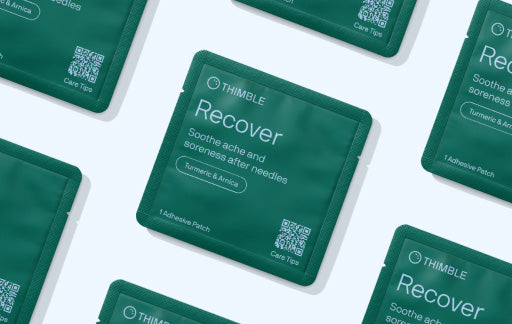
Soothe it. This is where Recover comes in. It's our patch with turmeric and arnica, designed to soothe the ache and tenderness that can follow a shot. For a kid whose sore arm might otherwise keep them off the playground or the court the next day, easing that soreness means the shot doesn't follow them into the rest of their week. That matters more than it sounds: for a lot of kids, the sore arm afterward is part of what builds dread for next time.
Rest and fluids. If the shot came with a bit of general achiness or tiredness, normal rest and staying hydrated help your body do its thing.
When to call your doctor
Almost all post-shot soreness is normal and resolves on its own. But a few signs mean you should check in with a healthcare provider rather than wait it out:
-
Redness or swelling that's spreading or getting larger, rather than shrinking
-
A spot that's increasingly warm, hard, or more painful after the first day or two
-
A fever that's high or won't come down, or that starts a day or more after the shot
-
A rash, hives, or any trouble breathing (seek care right away)
-
Soreness that isn't improving after several days
Recover soothes the ordinary ache. It isn't a treatment for an infection or a reaction, so if any of the above is happening, your doctor is the right call.
The short version
A sore arm after a shot is normal, expected, and usually gone within a couple of days. Keep the arm moving, cool the spot, soothe the ache, and give it a little time. And if the soreness is spreading or worsening instead of fading, check in with your doctor. Most of the time, it's just your body doing exactly what it's supposed to.
Manju Dawkins, MD is a board-certified dermatologist, mom of two, and the co-founder of Thimble. She created the Thimble Needle Care System after experiencing her daughter's first shots.
FAQ:
Why does my arm hurt after a shot? The needle causes minor local trauma, and many shots trigger an immune response right at the injection site, which leads to normal soreness, tenderness, or mild swelling. It's a sign your body is responding as expected, not a sign something went wrong.
How long does a sore arm last after a shot? For most people, the soreness peaks within the first day and fades over one to two days, usually resolving within about 48 hours. As long as it's improving each day, it's following the normal path.
How do I make my arm feel better after a shot? Keep the arm gently moving rather than still, apply a cool compress in the first several hours, soothe the spot with a patch like Recover, and rest. Ordinary soreness eases on its own within a couple of days.
When should I worry about a sore arm after a shot? Check with your doctor if redness or swelling is spreading or getting larger, if the spot becomes increasingly warm, hard, or painful after a day or two, if you have a high or delayed fever, or if the soreness isn't improving after several days. A rash, hives, or trouble breathing needs care right away.
Why is my arm more sore after some shots than others? Some shots, like tetanus and flu, tend to cause more local soreness because of the immune response they prompt at the injection site. More soreness doesn't mean anything went wrong.