

By Manju Dawkins, MD — Dermatologist, co-founder of Thimble and mom of 2. Last reviewed July 2026.
Whether it's your child's next round of vaccines, your own blood draw, or a medication you have to inject at home, most people wonder the same thing: Does it really have to hurt this much?
The good news is that there is a lot you can do to make the experience more comfortable. Here's what really helps before, during, and after the needle.
What the research says
You're not being dramatic if needles get to you. A 2022 study found that 63% of adults report some fear of needles, and among kids it's more than half of those aged 6 to 17. The good news is that the discomfort is treatable. Meta-analyses of needle procedures have found that numbing the skin beforehand significantly reduces pain, and that active distraction during the procedure reduces distress. The best approach addresses both the physical pain and the anxiety around it. They're connected, but they're not the same thing.
First, why shots hurt at all
A needle causes a quick, sharp sensation as it passes through the skin, where the pain-sensing nerve endings are most concentrated. Some shots also ache afterward, either from the needle itself or from the medication going into the muscle. So there are really two kinds of "hurt" to handle: the sharp moment of the poke, and the soreness that can follow. Some strategies reduce the pain of the needle itself, while others help with the soreness that can follow.
Numb the skin before the needle
One of the most effective ways to reduce needle pain is also one of the least commonly offered: numbing the skin beforehand.
This isn't just common sense. It's supported by decades of research. Clinical practice guidelines and systematic reviews consistently recommend topical anesthetics because they significantly reduce the pain of needle procedures without compromising vaccine effectiveness or blood draw success.
The biggest limitation is timing. Topical anesthetics need time to penetrate the skin, which takes roughly between 30-120 minutes depending on the product. That means planning ahead and applying them before you leave home, not once you've arrived in the waiting room.
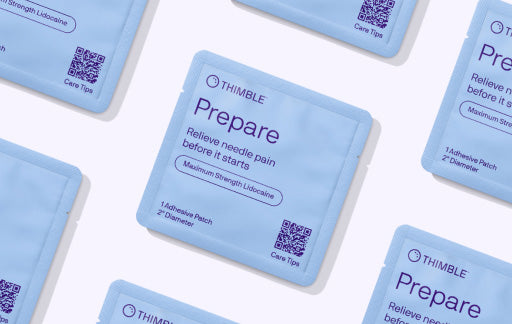
Topical anesthetics come in several forms. Creams can work well, but they need to be measured, applied correctly, and often removed before the procedure. Patches deliver a consistent dose to a defined area without the mess. That's why I created Prepare, an over-the-counter numbing patch with 4% lidocaine- no prescription needed. It's designed to make effective numbing simple enough that people will actually use it. Peel, place, and it's working by the time you arrive.
Distract during the injection
Numbing the skin reduces the pain signals coming from the needle. Distraction changes how your brain processes those signals. They work through different mechanisms, which is why combining them is often more effective than either strategy alone.
Distraction is more than simply taking your mind off the procedure. Research suggests that active distraction, where you participate in a task rather than passively watching a screen, is particularly effective at reducing pain and distress during needle procedures.
For young children, blowing bubbles is one of my favorite strategies. It combines focused attention with slow, controlled breathing. Older children and adults may prefer guided breathing, conversation, music, counting, or another activity that fully engages their attention.
Slow breathing deserves special mention. A long, relaxed exhale activates the parasympathetic nervous system, helping counter the body's stress response. It won't eliminate pain, but it can reduce anxiety, decrease muscle tension, and make the entire experience feel more manageable.
Position for comfort, and look away
Being held down flat or tensing up can make the experience harder. For kids, being held on a lap in a hug, upright, helps them feel safe and in control. For anyone, keeping the arm relaxed rather than braced makes the poke easier. Many people find that looking away makes the experience easier.
Soothe the ache after
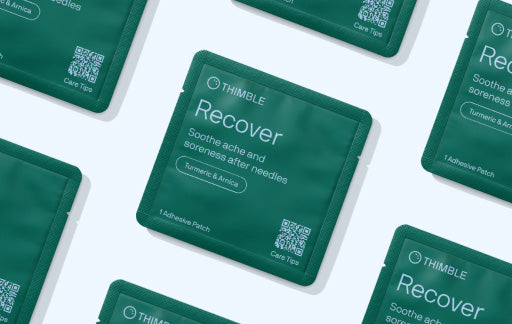
Some soreness afterward is normal, especially after vaccines or injections into muscle. A cool compress can help. I also created Recover, a plant-based patch with arnica and turmeric that's designed to soothe soreness, tenderness, and bruising after needle procedures.
Be honest, especially with kids
Don't promise it won't hurt at all. When the experience doesn't match the promise, you lose trust for next time. Tell them, or yourself, the truth: ‘You might feel a quick pinch, but we have a plan to make it easier.’ Honesty plus preparation beats false reassurance every time.
When it's more than nerves
For some people, needle fear crosses into genuine phobia, the kind that causes people to avoid essential care like screenings, blood donation, or treatment. If that's you or your child, you're not alone, and it's worth talking to your doctor, a therapist, or a child life specialist. Reducing the physical pain is often the first step that makes the fear manageable.
The short version
Numb the spot about an hour ahead. Distract actively during. Stay relaxed and look away. Soothe the soreness after. And be honest about what's coming. With a little preparation, shots can hurt a lot less, for kids and grown-ups alike.
The best outcomes don't come from choosing between numbing, distraction, or positioning. They come from combining them. Needle pain is influenced by both physical and psychological factors, so addressing both produces the greatest improvement in comfort.
Learn more
Our step by step guide for kids
Our step by step guide for adults
Manju Dawkins, MD is a board-certified dermatologist, mom of two, and the co-founder of Thimble. She created the Thimble Needle Care System after experiencing her daughter's first shots.
FAQ:
How can I make a shot hurt less?
The best approach starts before the appointment. Apply a topical anesthetic beforehand, use an active distraction such as controlled breathing or blowing bubbles during the injection, keep the muscle relaxed, and treat any soreness afterward if needed. Research shows that combining these strategies is more effective than relying on just one. Studies also suggest that reducing pain at the skin surface can lessen how painful the overall injection feels, even though the medication is delivered deeper into the tissue.
What do shots actually feel like?
Most injections cause a brief, sharp sensation as the needle passes through the skin. Depending on the medication and where it's injected, you may also notice pressure during the injection or soreness afterward. Topical anesthetics reduce the sharp pain from the needle, although some pressure may still be felt.
Does numbing cream or a patch really work for shots?
Yes. Topical anesthetics are recommended in clinical practice guidelines and have been shown to reduce pain during many needle procedures. They should be applied before the appointment, typically 30 to 90 minutes in advance depending on the product. Creams and patches can both be effective when used correctly.
How do I make shots hurt less for my child?
Plan ahead by applying a topical anesthetic before the appointment. During the injection, use an active distraction such as blowing bubbles, singing, or guided breathing, and hold your child upright in a comforting position whenever possible. Stay calm yourself, be honest about what to expect, and praise their effort afterward rather than focusing on whether they cried.
Does the flu shot hurt?
Most people describe the flu shot as a quick pinch followed by mild arm soreness that can last a day or two. A topical anesthetic can make the injection itself more comfortable. If soreness develops afterward, gentle movement of the arm, a cool compress, or a soothing patch designed for post-needle discomfort, such as Recover, may help improve comfort.
Does the Tdap (tetanus) shot hurt?
The Tdap vaccine protects against tetanus, diphtheria, and pertussis. While the injection itself is usually brief, it's well known for causing arm soreness afterward, sometimes more than the needle itself. A topical anesthetic can reduce the pain of the injection, and comfort measures afterward, including a soothing patch such as Recover, may help reduce post-injection tenderness and discomfort.
Does the HPV shot hurt?
The HPV vaccine is commonly given during early adolescence, when needle anxiety is especially common. Most teens describe the injection as brief, but anxiety can amplify how painful it feels. Preparing the skin with a topical anesthetic and using distraction techniques during the injection can make the experience significantly more comfortable.
Does the meningitis shot hurt?
Like most vaccines, the meningitis vaccine is usually experienced as a brief needle stick followed by mild arm soreness. Preparing the skin beforehand with a topical anesthetic can make the injection more comfortable. If soreness develops afterward, a cool compress or a soothing patch such as Recover may help improve comfort over the next day or two.
Do multiple shots at once hurt more?
Receiving several vaccines during the same visit can increase both soreness and anxiety, but there are effective ways to make the experience more comfortable. Applying a topical anesthetic to each injection site, using active distraction throughout the visit, and preparing children honestly for what to expect can reduce both pain and distress.